Two towns merged for an Olympics and never separated
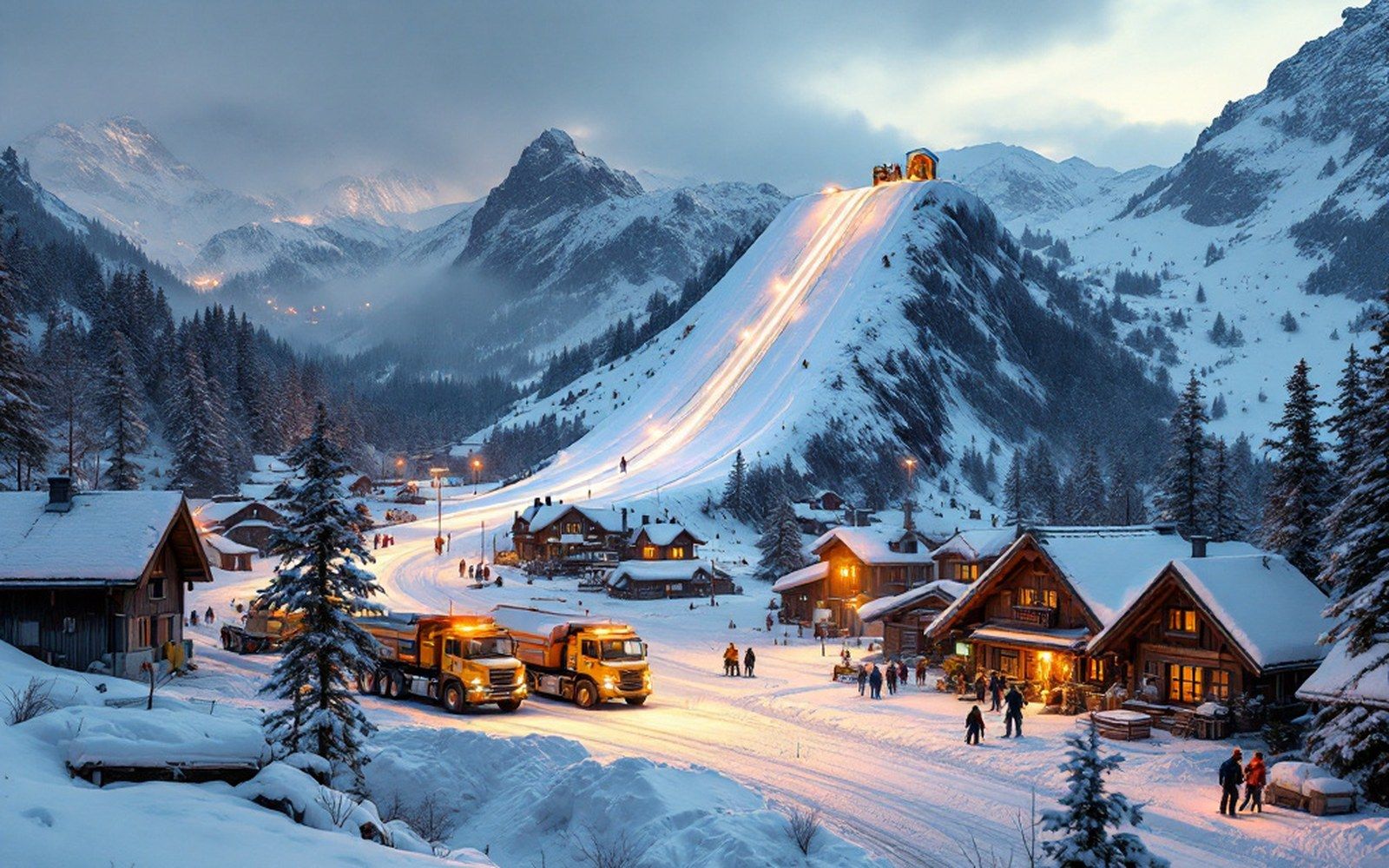
A ski jump structure above a town under snow
One decree, one hyphen, and a ski stadium that still draws the crowds: Garmisch and Partenkirchen were legally joined in 1935 to host the Winter Games, and the combined town never came apart.
A forced marriage that stuck
The two settlements had stood at the foot of the Zugspitze for centuries, separated by the river Partnach and by the mutual indifference common to neighbouring Bavarian market towns. Garmisch was the larger and more prosperous; Partenkirchen, to the east, was older — a staging post on the Roman road that once ran north through the Alps. They traded, occasionally quarrelled over water rights and grazing, and kept their own parish churches. The idea that they should become one town would probably never have occurred to either of them.
It occurred instead to the National Socialist government in Berlin. When Germany was awarded the 1936 Winter Olympics — the decision taken by the International Olympic Committee in 1933, before the political situation had fully clarified — the regime needed a single coherent host municipality. By decree in 1935, Garmisch and Partenkirchen were merged into Garmisch-Partenkirchen ↗, the hyphen marking a join that has never been officially dissolved. The local population did not vote on the matter.
What they built, and what remains
The Games of February 1936 required infrastructure at a scale neither town alone could have justified. The Olympic ski stadium — the Skistadion — was constructed on the lower slopes above Garmisch, with a large ski jump and a smaller one alongside it, spectator embankments carved from the hillside, and a finish area for the Alpine events. It was the first Winter Olympics to include Alpine skiing as a full medal discipline; the combined event, run on the Kreuzeck and Zugspitze slopes, drew competitors from across Europe and gave the games a character distinct from the older Nordic programme.
The stadium itself was built to last, and it has. The FIS Alpine Ski World Cup Kandahar race — one of the oldest downhill events on the circuit, established in partnership with the Kandahar Ski Club — has been run on the same Strecke (course) above the town for decades, finishing in the stadium that the Olympics left behind. The crowds pack the finish embankments in a way that makes clear the infrastructure was scaled for exactly this kind of occasion. Ski jumping competitions return there too; the Four Hills Tournament, which begins in Oberstdorf in late December, holds its second event at the Große Olympiaschanze in Garmisch-Partenkirchen on New Year's Day, a calendar fixture since the tournament's inaugural edition in 1953 ↗.
The town that the merger made
The idea that they should become one town would probably never have occurred to either of them
Walk through Garmisch-Partenkirchen today and the seam is still faintly visible. The Ludwigstraße in Partenkirchen, its facades painted in the Lüftlmalerei style — the traditional Bavarian fresco technique applied to exterior walls — runs as a distinct street character from the more commercial centre around the Garmisch Bahnhof. The railway station sits firmly in the Garmisch half; the older pilgrimage road to the church of St. Anton runs through Partenkirchen. Locals often still say which half they are from.
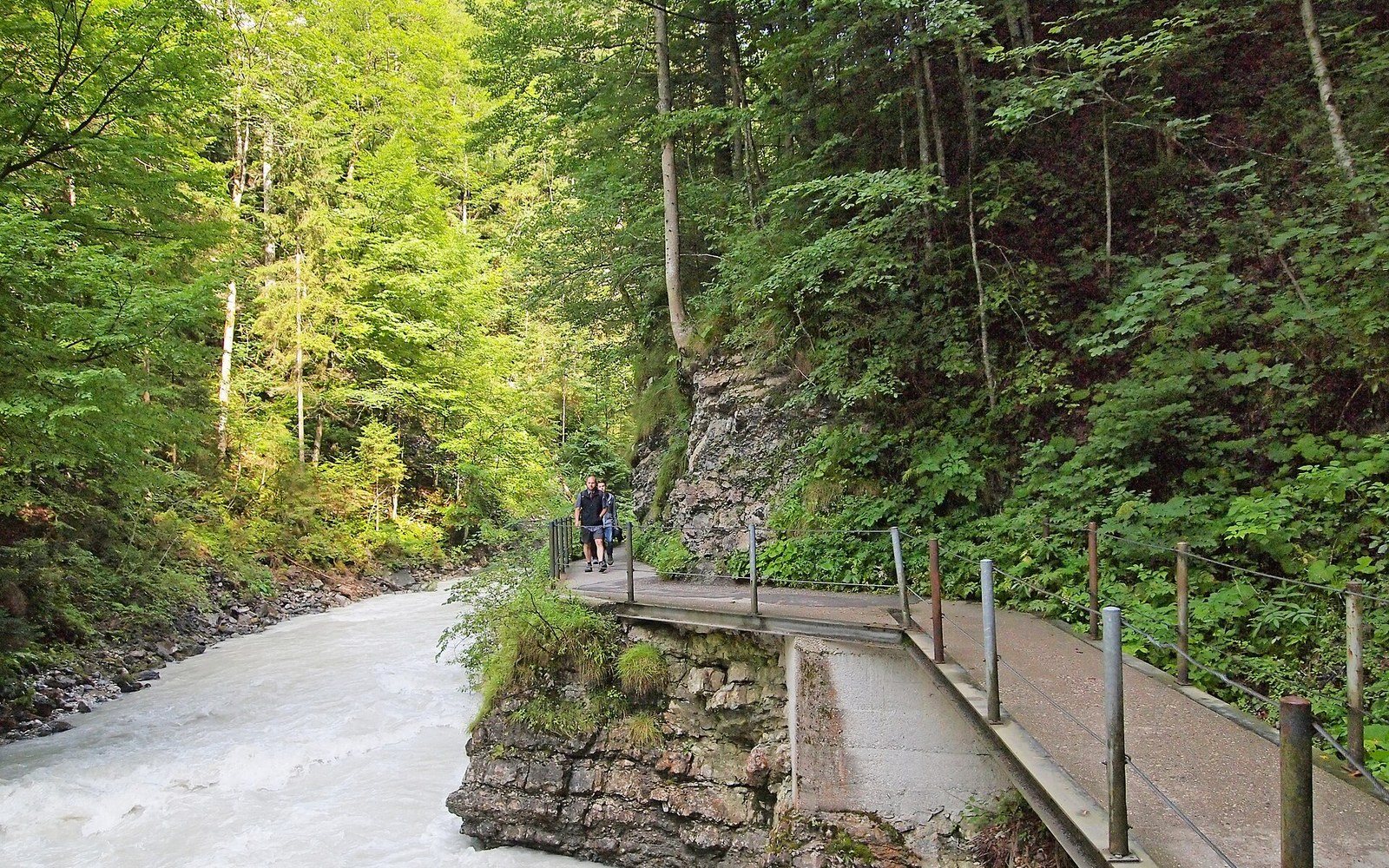
The Partnach river, which gives one town its name, runs through the Partnachklamm — the 700-metre limestone gorge east of the town centre — before opening out into the valley floor. The gorge predates the merger by geological ages and remains indifferent to municipal boundaries.
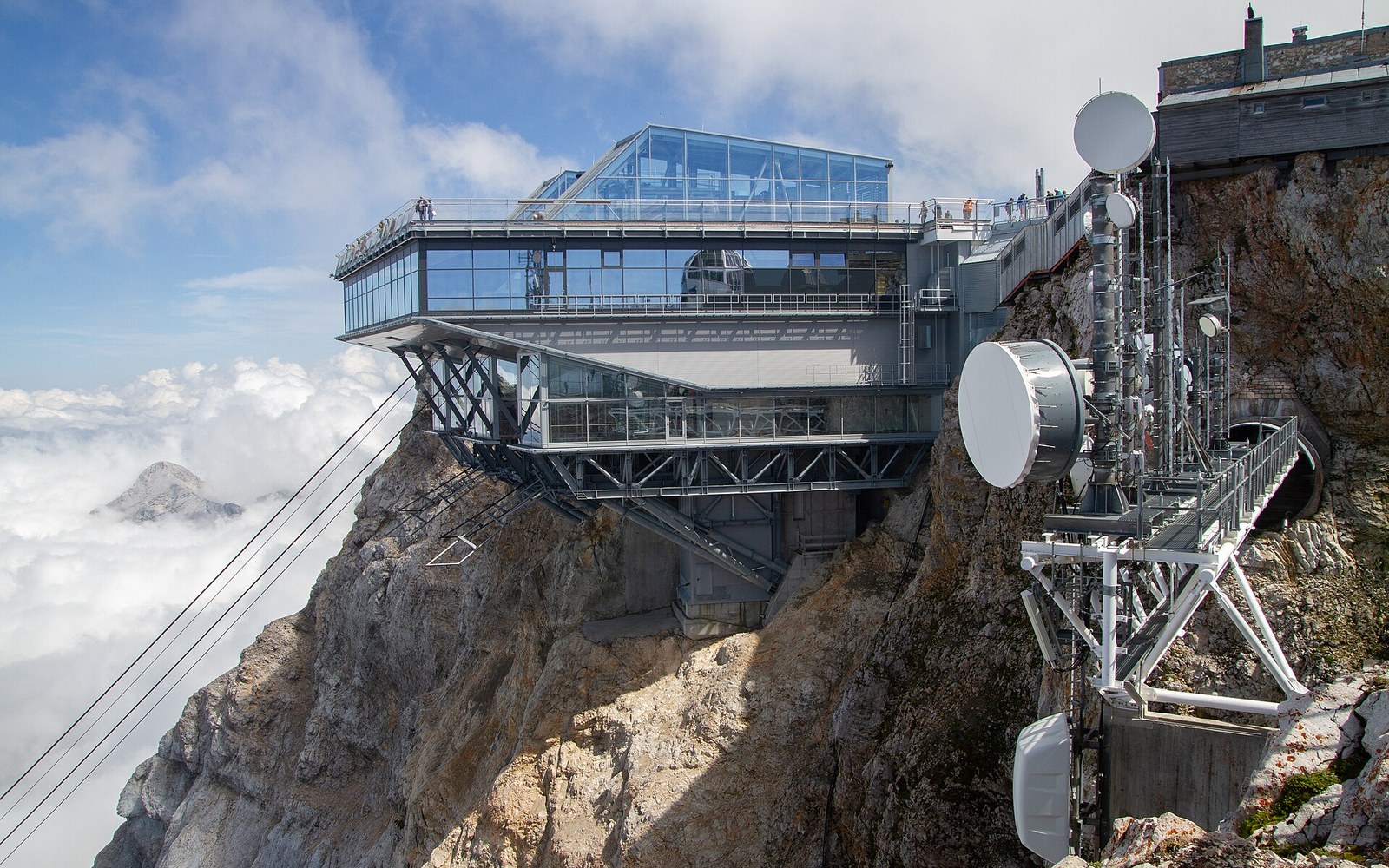
The Zugspitze, at 2,962 metres the highest point in Germany, stands above both halves equally. The Bayerische Zugspitzbahn, the rack railway that has climbed from the valley since 1930, departs from a station a short walk from the Garmisch Bahnhof. The mountain was always the reason people came; the merged town is the structure that receives them. Whether the decree of 1935 made the place better or simply larger is a question the hyphen quietly defers.