Hintertux stays open twelve months on glacier ice
A glacier snout with lift pylons crossing it, figures small on the snowPhoto: Aerial image of the Hintertux Glacier (view from the north) · Wikimedia Commons
Snow in August is not unusual here; what is unusual is that the skiing infrastructure opens to match it.
What makes Hintertux different
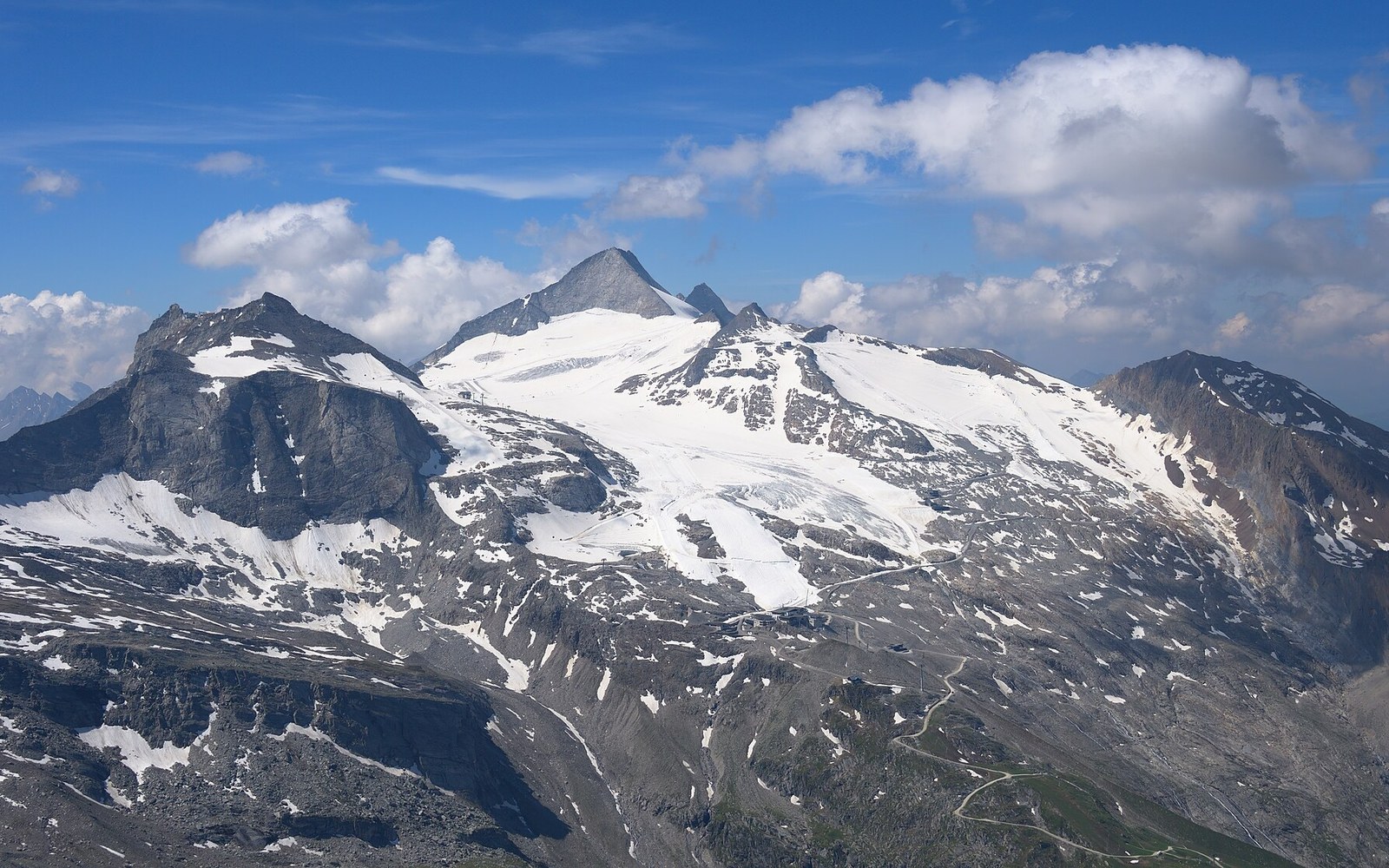
The Tuxer Gletscher sits at the head of the Zillertal, pressed into a cirque above Hintertux village at around 3,250 metres. Where nearly every glacier ski area in the Alps operates a reduced autumn-to-spring season, Hintertux runs twelve months of the year — lifts turning in July as reliably as in January, serving a permanent snowfield that the altitude and aspect keep functional when every lower mountain has gone bare and brown.
The reason is elevation combined with orientation. The glacier faces broadly north-northwest, limiting direct summer radiation, and the upper snowfields sit high enough that the seasonal melt cycle never fully consumes them. The Tuxer Ferner — ferner being the regional term for a working glacier — has retreated measurably over the decades, as monitoring data from the Austrian alpine clubs confirms, but it retains enough permanent ice and annual accumulation to keep a usable ski terrain in place throughout the calendar.
That year-round availability changes the character of the place profoundly. Hintertux is not primarily a resort in the conventional sense — it is a training base. National ski teams from across Europe and beyond block-book time there in summer and early autumn, when the rest of the Alps are on grass. The piste network above the glacier serves structured programme work: measured, groomed, consistent. A coach needs a reliable surface at a reliable time; Hintertux delivers that in a way that no low-altitude venue can match.
How you get up there
The ascent is in stages, each generation of lifts building on the one before. The journey from the valley floor to the upper glacier stations spans more than 1,500 metres of vertical and takes three successive gondola systems. The first stage climbs from Hintertux village; the second carries passengers to the Tuxer-Fernerhaus at around 2,660 metres; a third stage continues to the Gefrorene Wand — the Frozen Wall — at approximately 3,250 metres, where the highest ski terrain sits.
The infrastructure is substantial. The upper stations include tunnelled galleries inside the glacier itself, where changing rooms and equipment storage are carved into the ice rather than standing on it — an engineering arrangement that keeps the working base functional even when surface conditions above are uncertain. These glacier tunnels are a practical response to altitude: temperatures at the surface can shift sharply, but inside the ice mass, conditions stay close to constant.
The Tuxer Gletscher sits at the head of the Zillertal, pressed into a cirque above Hintertux village at around 3,250 metres
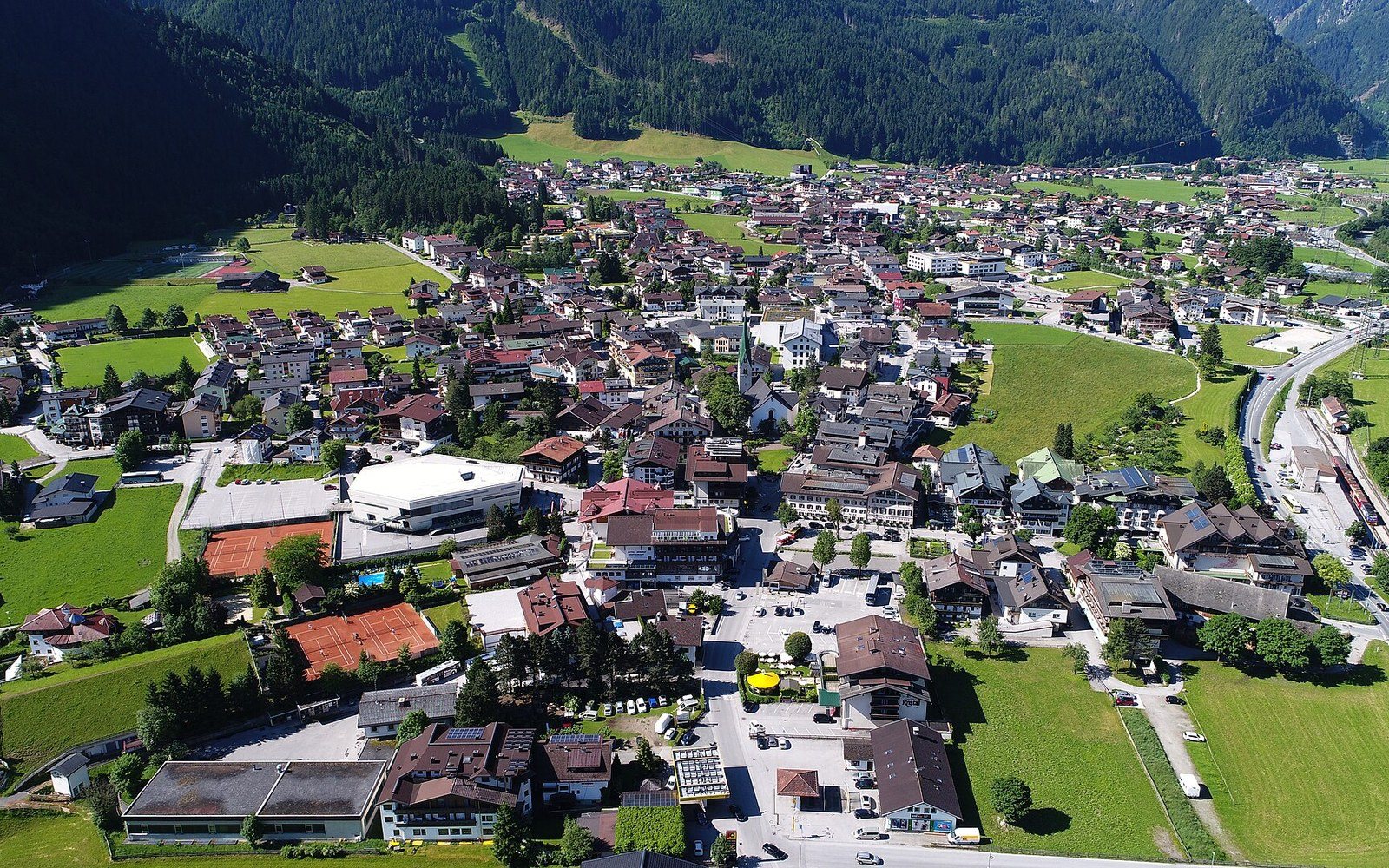
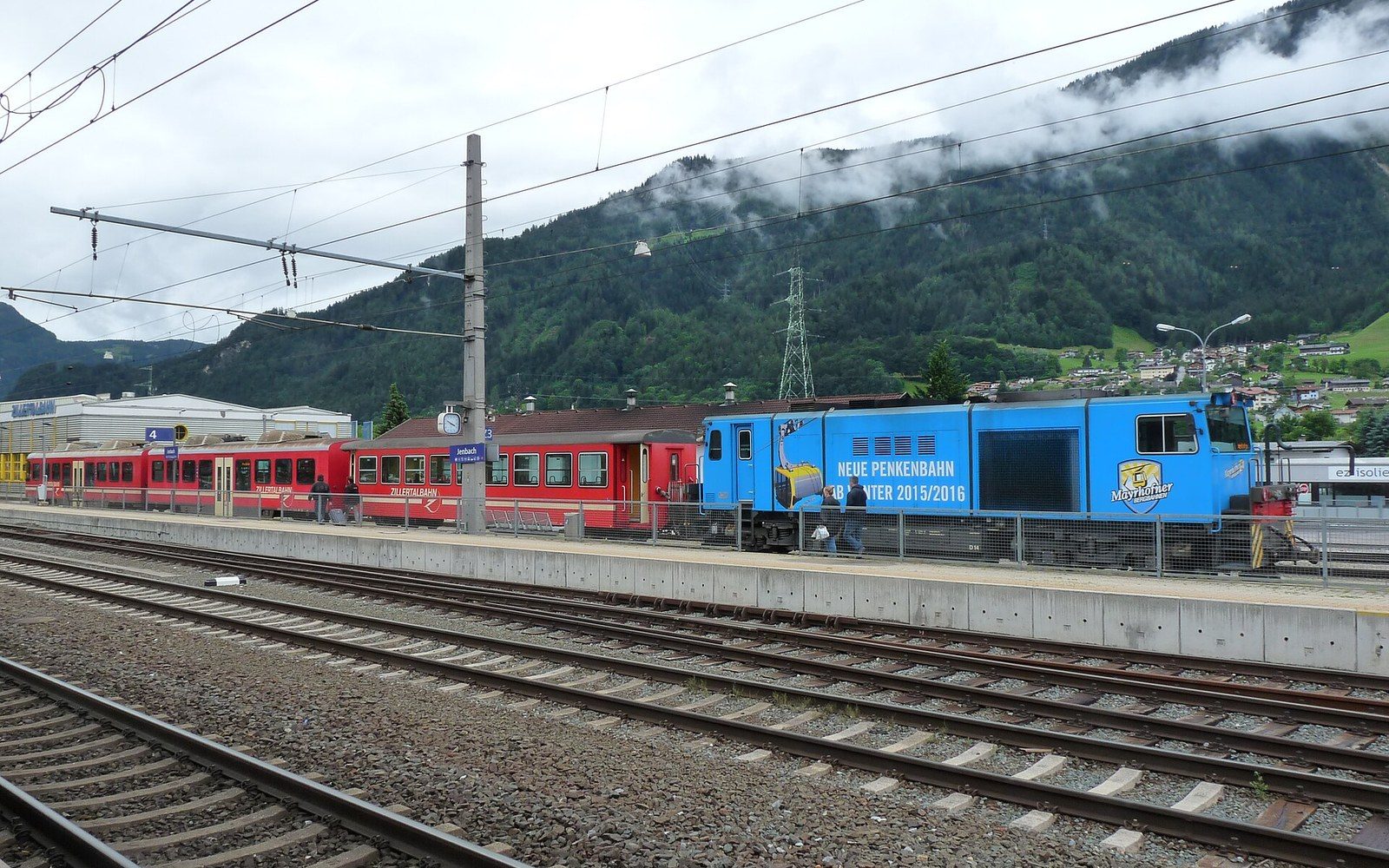
The valley below offers its own logic. The Zillertalbahn, the narrow-gauge railway running the length of the Zillertal from Jenbach, terminates at Mayrhofen, well short of Hintertux. From Mayrhofen a bus route covers the remaining distance up the Tuxertal, the side valley that rises steeply to the glacier's base. The road itself is a commitment — single carriageway through a tight valley with a gradient that makes itself known.
The glacier in the wider Zillertal
Hintertux occupies a singular position in the Zillertal's geography — furthest in, highest up, open when everything else is not. The other ski areas of the valley — above Mayrhofen, above the villages in the main valley — follow ordinary seasonal calendars. Hintertux stands apart from that, both physically and functionally.
What the glacier teaches the visitor who simply arrives in summer is something the Österreichischer Alpenverein ↗ and the Deutscher Alpenverein have long documented in their glacier reports: that the Tuxer Ferner, retreating though it is, holds a working relationship with altitude and latitude that keeps it productive on a timescale no other Zillertal terrain can claim. Standing at the Gefrorene Wand in August with lift-served snowfield dropping away below, and the brown valley visible some 1,700 metres below, is the clearest possible lesson in what it means that the glacier does not close.