Kehlsteinhaus took thirteen months because Todt blasted through winter
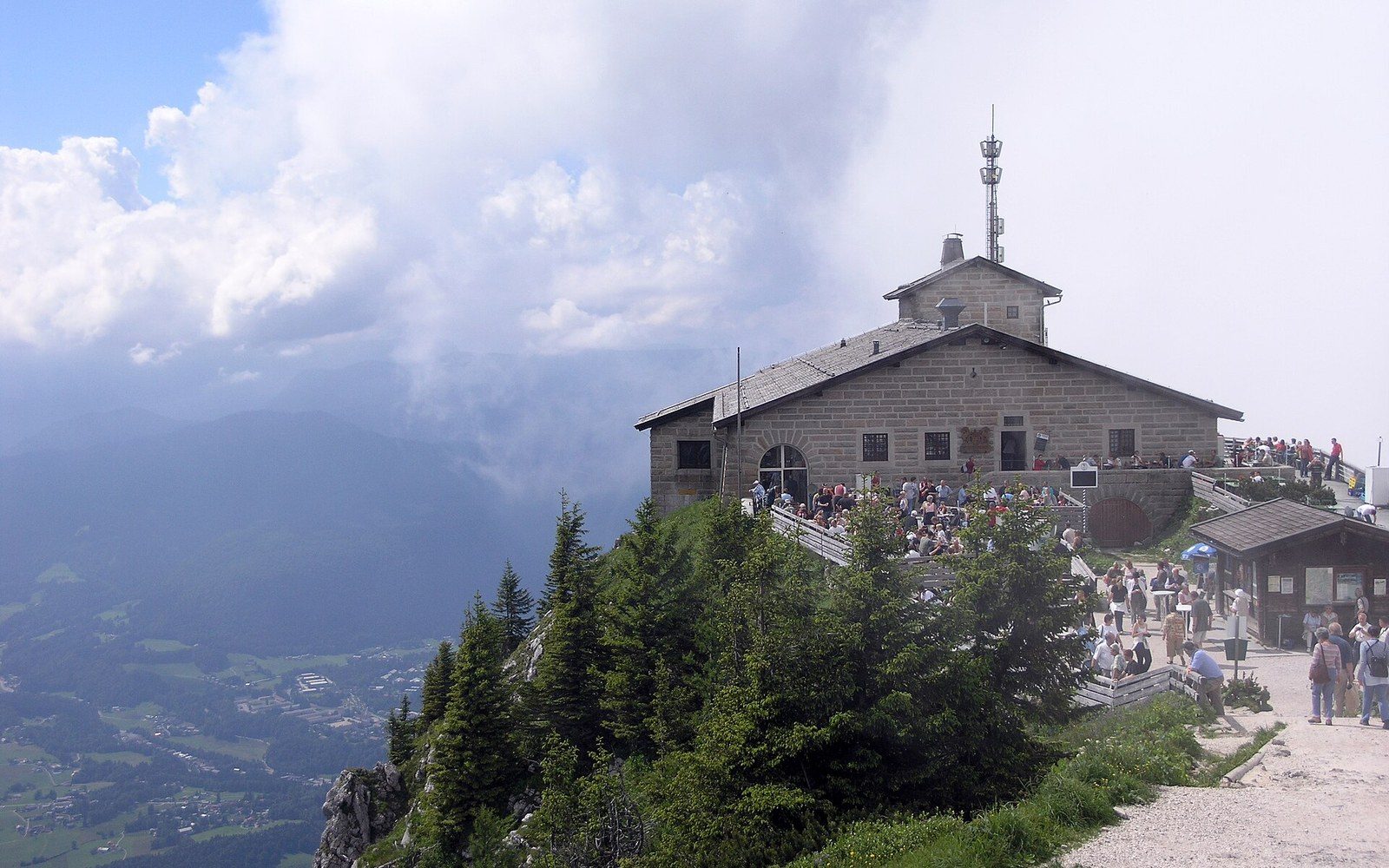
A stone building on a summit ridge with cloud below itPhoto: Kehlsteinhaus Obersalzberg Bavaria Germany 2004 · Wikimedia Commons
The Kehlsteinhaus sits at 1,834 metres on a subsidiary summit of the Hoher Göll massif. Getting there required blasting a road and a vertical shaft through solid rock, and doing both in just over a year.
What was built, and why
The Kehlsteinhaus was constructed between 1937 and 1938 as a reception building for the Nazi leadership, commissioned through the administration of Martin Bormann and funded by the Nazi Party rather than the German state. It stands above Berchtesgaden, a small Bavarian town that had become the centre of the regime's private mountain retreat — a compound on the Obersalzberg whose buildings were largely demolished after 1945, though the Kehlsteinhaus itself survived. It is now run as a catering facility, and the road and lift that serve it remain the main reason the engineering is worth examining.
The access road begins on the Obersalzberg at around 1,100 metres. It climbs roughly 700 metres of vertical height across six kilometres — a sustained gradient that required blasting directly into the limestone of the Kehlstein and Hoher Göll massif. Five hairpin tunnels punch through rocky spurs where the topography made conventional switchbacks impossible. The road was designed and directed by Fritz Todt, the engineer who had already been leading construction of the German Autobahn network, and the roadway was completed in 1938 after thirteen months of construction — a pace that required continuous night shifts and work through winter.
At the road's end, there is no surface path to the summit building. Instead, a 124-metre tunnel, lined in brass and finished in polished granite, leads horizontally into the mountain and terminates at a lift shaft. The lift car, still in place and still operating, was fitted with Venetian mirrors, green leather upholstery and gilded metalwork: its 41-second ascent delivers passengers directly into the building. The brass lining belongs to the lift car, and like the mirrors and leather it was a decorative flourish rather than a practical measure. The engineering required drilling and lining a near-vertical shaft more than one hundred metres into the summit ridge.
What remains and what it is
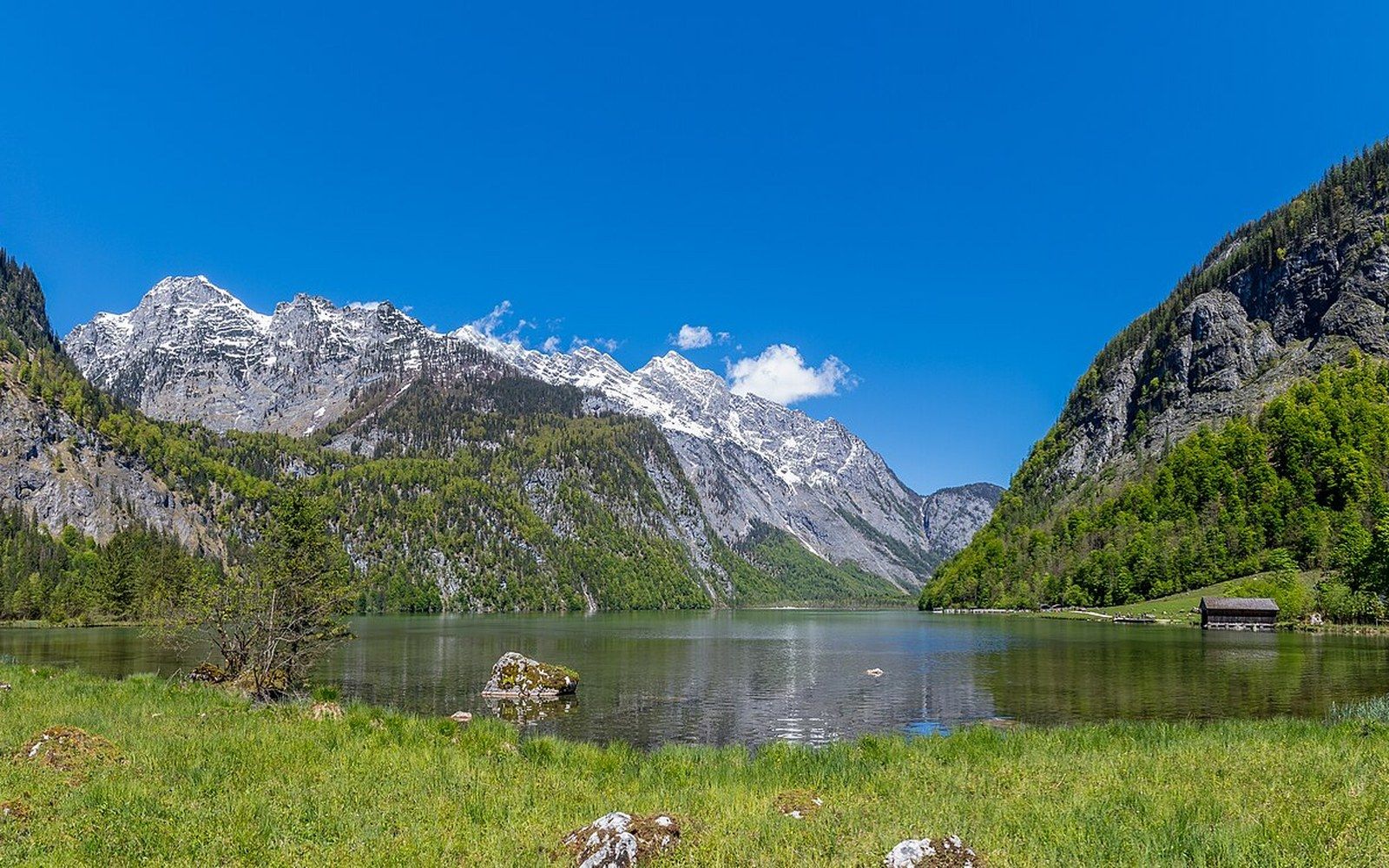
The Kehlsteinhaus stands at the edge of what is now the Berchtesgaden National Park, established in 1978 — the only alpine national park in Germany. The building is visible from some distance, a compact rectangular structure of locally quarried stone fitted to the edge of the ridge at a point where the ground drops sharply on three sides. The views from the terrace take in the Königssee to the south and the Untersberg to the north.
It is now run as a catering facility, and the road and lift that serve it remain the main reason the engineering is worth examining
The Obersalzberg Documentation Centre, which opened in 1999 on the site of the former Nazi compound below, provides the historical context that the Kehlsteinhaus itself does not carry. The engineering at the summit is impressive in the mechanical sense — the precision of the shaft, the speed of execution, the quality of the materials — and that is exactly why it sits uncomfortably if treated as spectacle. It was built by a workforce under coercive conditions, at extraordinary speed, in service of a regime whose record is documented at length in Berchtesgaden itself.
What the site actually shows a visitor standing inside the tunnel is what it took to place a building on a ridge that had no natural approach: a road requiring five internal hairpins, a horizontal tunnel through 124 metres of rock, and a vertical lift shaft bored into the summit. The construction timeline, documented by Fritz Todt's own organisation ↗, compressed into thirteen months what comparable alpine engineering projects typically spread across three or four years. The labour conditions that made that pace possible are part of the same record, and the Documentation Centre below is where that record lives.
The lift still runs. The road still climbs. Both are pieces of 1930s mountain engineering that happen to be intact, which is unusual. What they served is the reason neither can be described without its history.