How glacial flour turns alpine lakes turquoise
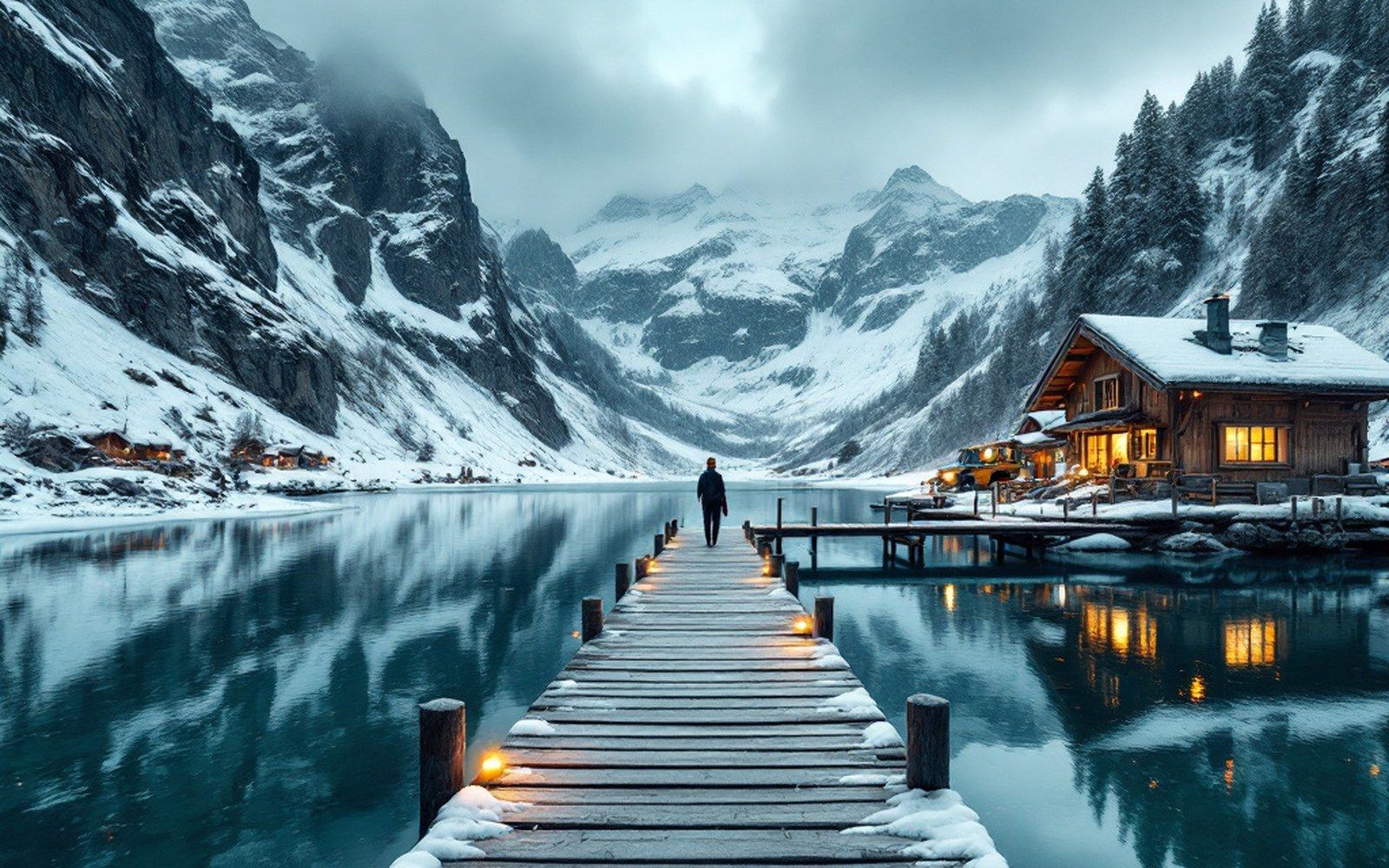
A green alpine lake with a wooden jetty and a person at the end of it
The colour of an alpine lake is not decoration — it is data. Suspended rock flour ground by ice scatters light toward blue-green, and the shade shifts with the glacier's workload.
Why the water looks like that
Stand at the edge of almost any high alpine lake fed by glacial melt and the colour stops you. It is not quite blue and not quite green — a milky, saturated turquoise that looks almost artificial. It isn't. The colour is a product of what is moving inside the water.
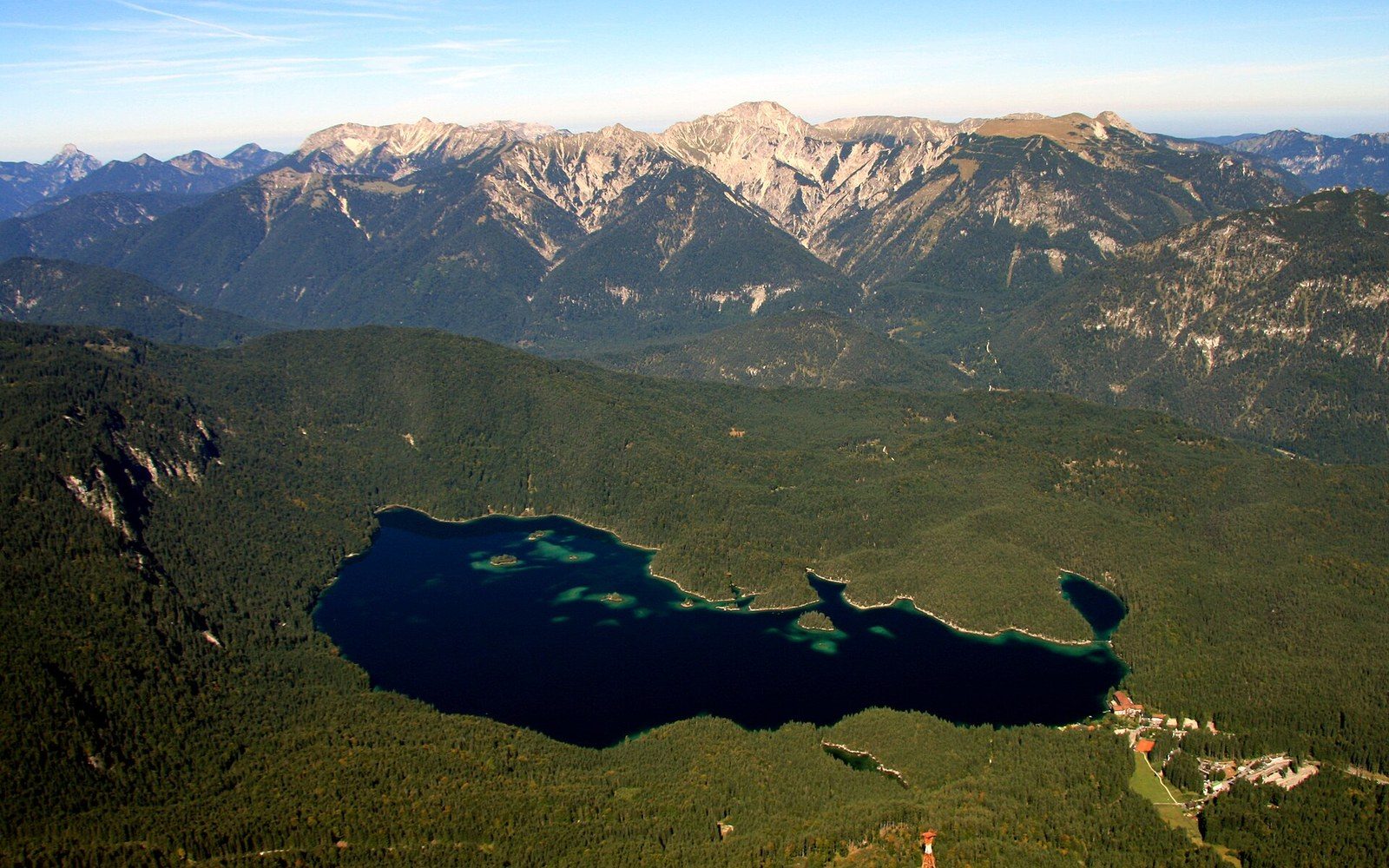
Glaciers grind. As ice flows over bedrock, it crushes and abrades the rock beneath it into a powder so fine it never fully settles. This material — rock flour ↗, technically glacial flour — has particles measured in micrometres, small enough to stay suspended in meltwater for days or weeks. When that meltwater drains into a lake, the suspended particles scatter short-wavelength light: blue and green bounce back toward the surface; the longer reds and yellows are absorbed. The result is the blue-green you see at the Eibsee below the Zugspitze, at the high Kaprun reservoirs, at any lake with a living glacier in its catchment.
The colour is also seasonal. In late summer, after months of melt, the flour concentration is highest and the turquoise deepens. By late autumn, when meltwater slows and particles gradually settle, the same lake can read more clearly blue. The glacier upstream is, in effect, broadcasting its activity level into the water below.
Cold, clear, and deceptive
The transparency is its own puzzle. Water carrying rock flour is not murky in the conventional sense — it scatters light rather than absorbing it, and in the upper metre or two it can look almost transparent. That clarity, combined with the colour, makes depth almost impossible to judge from the shore. The Eibsee, sitting in the debris field of a prehistoric rockfall below the Zugspitze, reaches just over 30 metres at its deepest; from the bank it can look half that. The Königssee, constrained between the vertical walls of the Berchtesgaden National Park, drops to around 190 metres, making it one of the deepest lakes in Germany — and its cold, nearly windless basin keeps the water stratified and clear enough that the depth reads as colour rather than distance.
Temperature compounds the illusion. Alpine lakes at altitude rarely warm much above single figures even at the surface in summer; below the thermocline, the water stays close to 4 °C year-round, the temperature at which freshwater reaches its maximum density. A lake that looks inviting, lit up green-blue in afternoon sun, may be physiologically dangerous to swim in within a few metres of shore — not because of hidden currents but simply because of how fast the body loses heat in water that cold. Cold water does not announce itself the way cold air does.
Not all green is glacial
It is not quite blue and not quite green — a milky, saturated turquoise that looks almost artificial
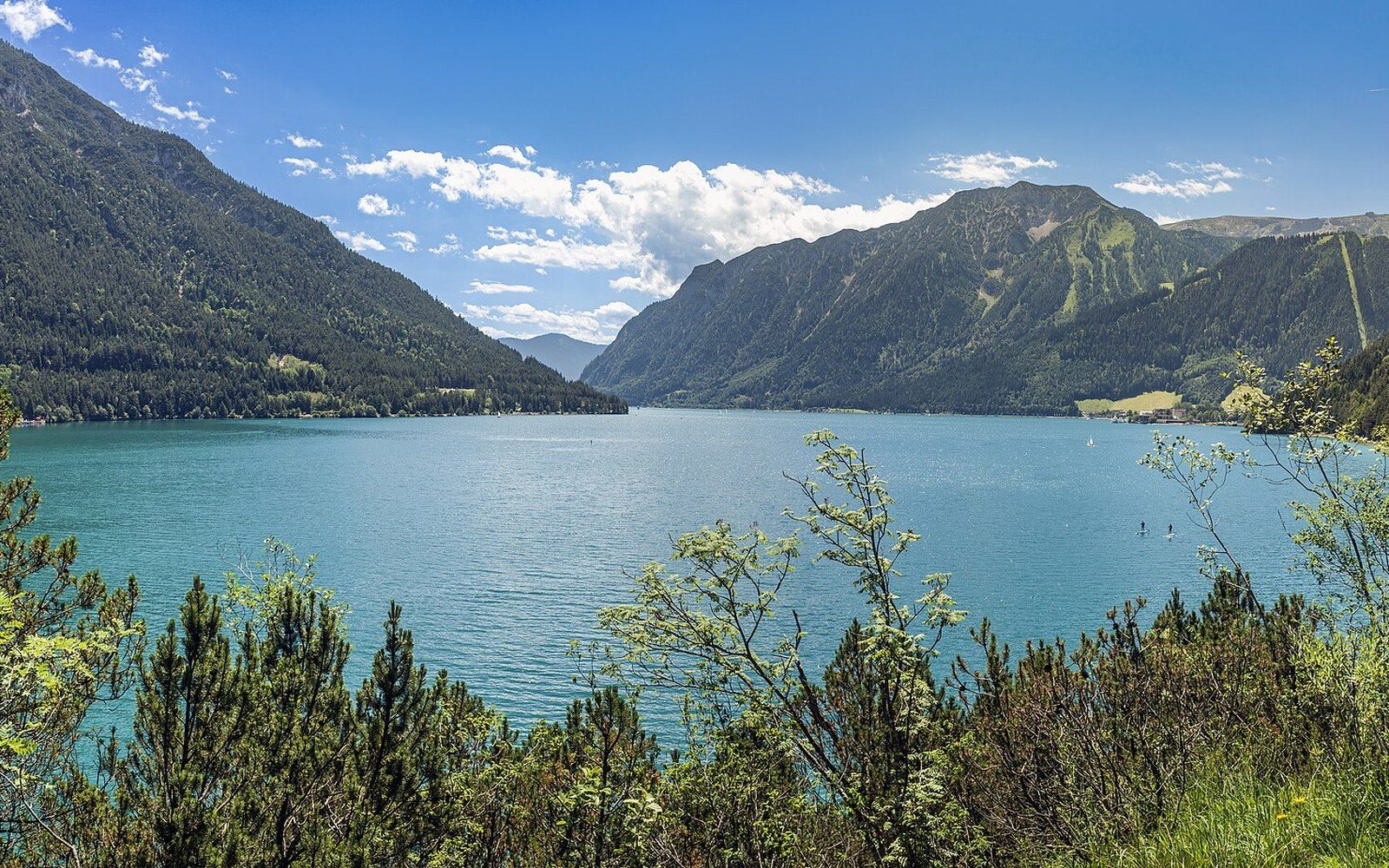
Not every alpine lake owes its colour to rock flour. Lakes in limestone country — the Achensee in Tyrol, for instance — can show a clear, deep blue-green that comes from a different mechanism. Calcium carbonate ↗ dissolved from the surrounding rock precipitates into the water as fine aragonite particles, producing an effect optically similar to glacial flour. The Achensee, which the Achenseebahn has reached by rack railway since 1889, sits in a basin carved partly by glacial action and partly by the dissolution of surrounding limestone — its colour is the sum of that geology, not a simple glacier signal.
What both types share is the underlying physics: suspended fine particles, scatter-dominated optics, and a colour that shifts with season, watershed and weather. When the rock flour concentration drops because a glacier retreats, the lake it feeds tends toward clearer, darker blue — more transparent, less saturated. In that sense the lakes are archives, recording in real time the slow recession of the glaciers feeding them.