Flexen galleries deflect avalanches and keep Lech open
Flexen galleries from below, road cut into the wall, a bus on it for scalePhoto: 360° Flexenpass Straße · Wikimedia Commons
The Flexen road is cut into the cliff face above Stuben, roofed with reinforced concrete wherever the avalanche paths cross it — and that engineering is the only reason Lech and Zürs stay open in winter.
What a gallery is, and why it exists
A gallery (German: Galerie) is not a tunnel. A tunnel goes through a mountain; a gallery runs along its face, open on one side to air and light, closed on the other by the rock it is bolted to. The distinction matters because the two structures solve different problems. A tunnel eliminates terrain by passing beneath it. A gallery accepts the terrain and deflects what comes off it — snow, rock, ice — over the road and away.
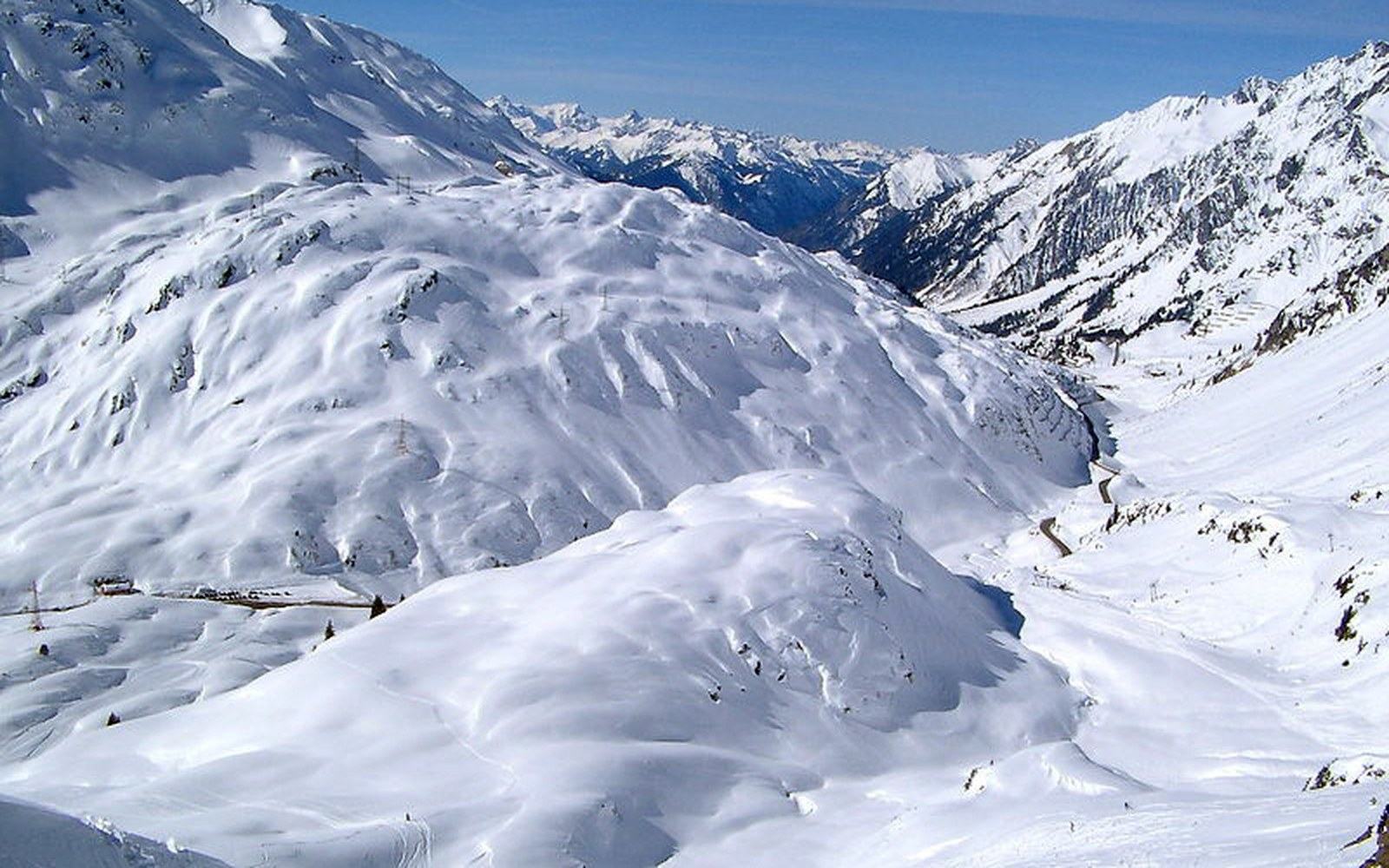
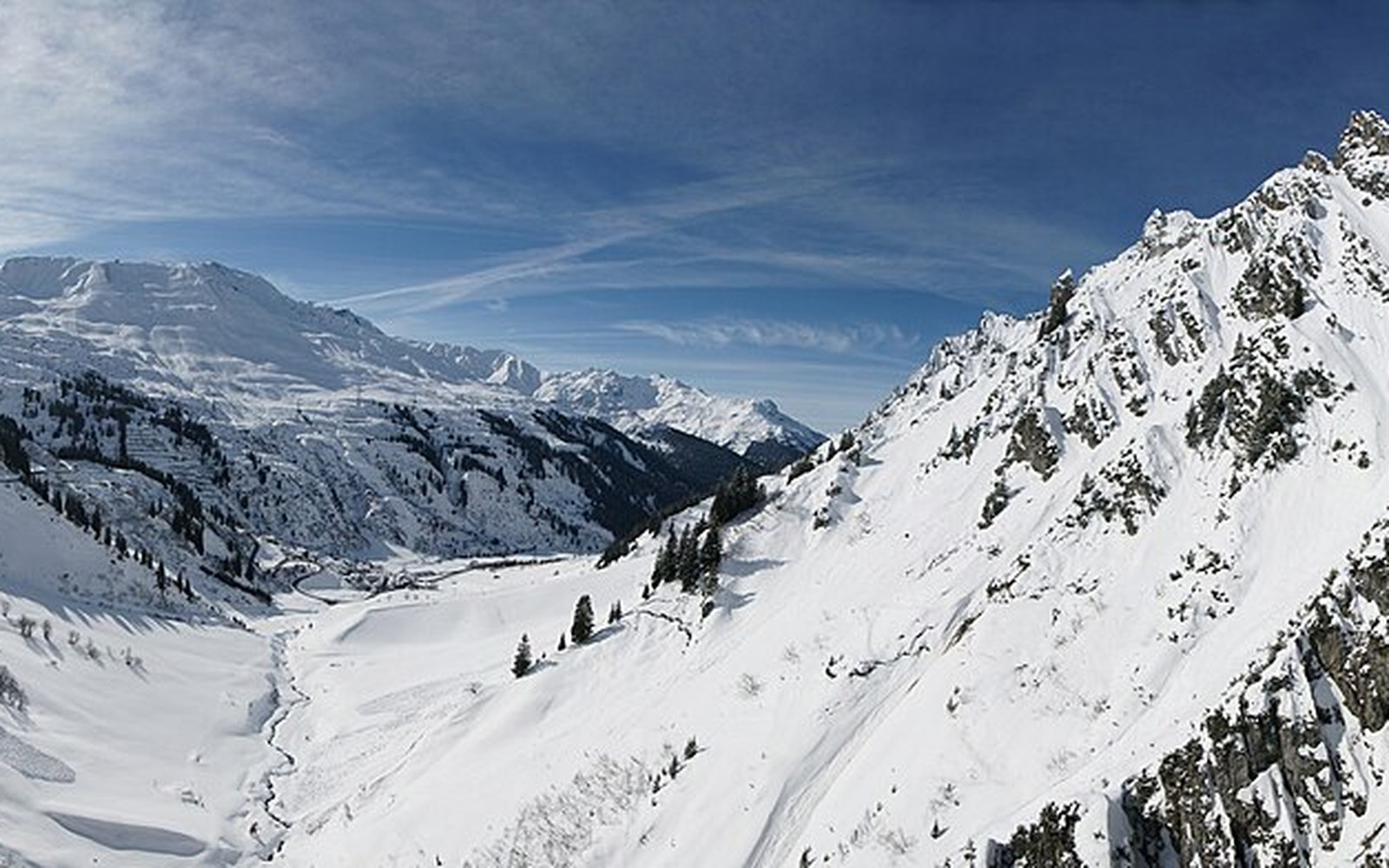
The Flexen Pass road, which climbs from Stuben to connect Zürs and then Lech to the rest of the Arlberg, passes through some of the most avalanche-prone terrain in the Eastern Alps. The slope above it funnels debris down a series of well-mapped paths with mechanical regularity every winter. Without intervention, the road would be blocked for months at a time. The galleries that cover the most exposed sections redirect avalanche debris across the roof and let it continue downslope, leaving the road underneath intact.
Construction on the Flexen road began in the 1890s, when the connection between the Arlberg and the Bregenzerwald villages above Lech was first engineered for wheeled traffic. The galleries came in stages, as avalanche science and reinforced-concrete technology ↗ advanced through the twentieth century. The most serious exposures were addressed not once but repeatedly — a gallery that was adequate for light traffic in the 1930s was rebuilt to carry the loads of modern winter tourism. The concrete overhead today is thick, heavily reinforced, and engineered to absorb the impulse load of a moving snow mass rather than simply bear its weight.
The engineering in the cliff
The wall the road travels across is limestone, and the road itself is partly cut into it — blasted and shaped before the gallery roof was cast. In the steepest sections, the outer edge of the road has no natural foundation at all; the roadbed is a cantilever supported from anchors driven into the cliff behind it. The gallery roof is then cast monolithically with the outer wall, forming a box section that resists both the downward pressure of snow and the lateral force of an avalanche in motion.
A gallery accepts the terrain and deflects what comes off it — snow, rock, ice — over the road and away
Drainage matters as much as strength. The roof slopes outward so that snow slides clear rather than accumulating, and the deflection geometry at each gallery mouth is calculated to redirect the flow rather than take it head-on. Where two avalanche paths converge close together, the gallery sections are joined to eliminate the gap between them; a short open stretch between two roofed sections would simply collect debris and defeat the purpose of both.
The result is a road that reads as a tunnel from inside — shadowed, narrow, its concrete surface carrying the marks of formwork — but that opens on one side to a view of the valley far below. On the Flexen, those windows frame Stuben and the Arlberg pass road beneath it, with the Arlberg rail tunnel portal at Langen barely visible in the distance.
Winter maintenance crews treat the galleries as infrastructure to be inspected as carefully as a bridge. Roof drainage, expansion joints, anchor integrity and the condition of the deflection aprons above each mouth are checked regularly; the Vorarlberg road authority carries the Flexen road as critical infrastructure precisely because the two villages above it have no alternative winter connection. Closing the galleries means closing Lech and Zürs. That consequence is what the concrete is carrying.