St. Anton rotates cabins through a boarding wheel
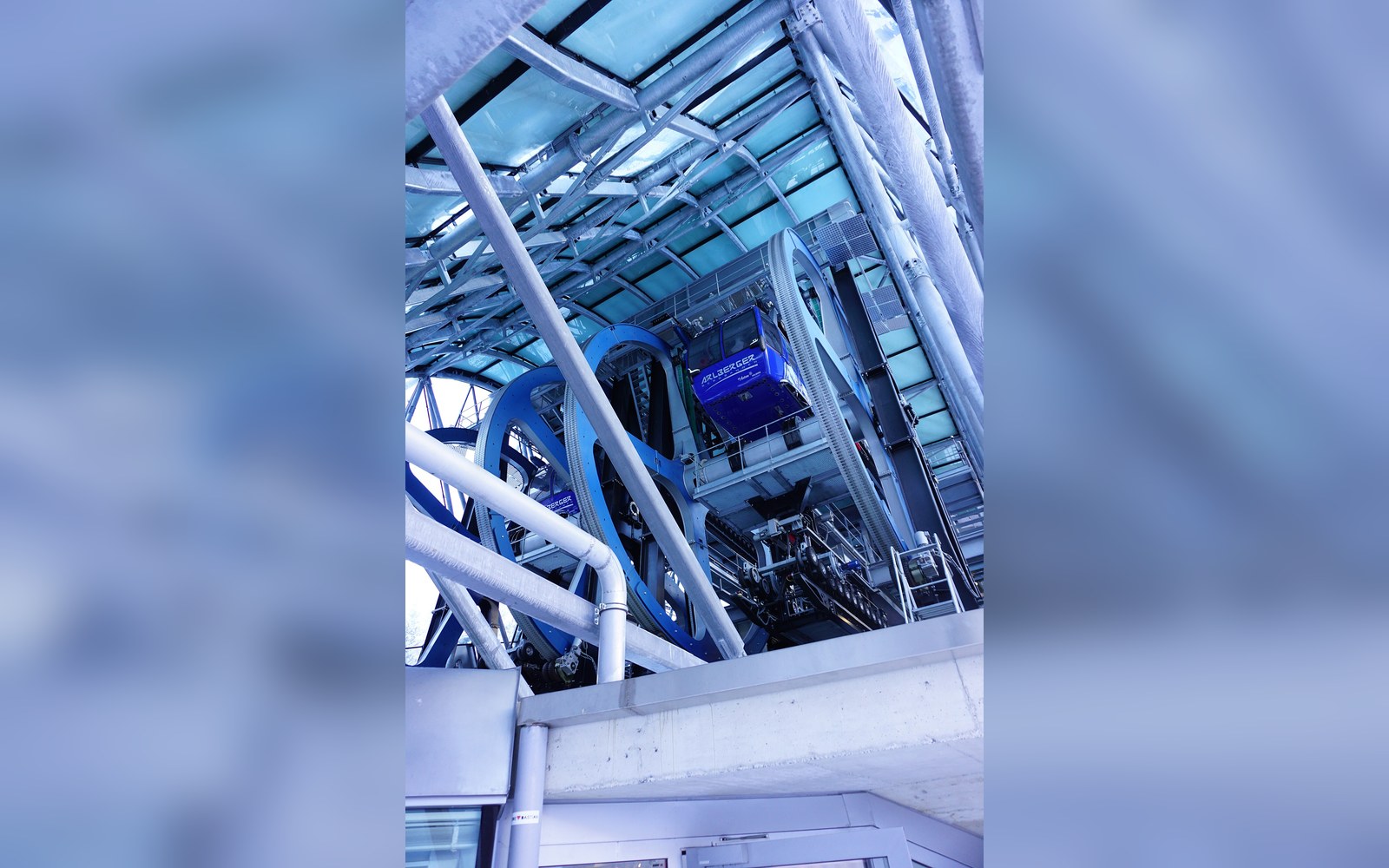
Inside the Galzigbahn station, the boarding wheel turning with passengers stepping into cabinsPhoto: Galzigbahn Riesenrad 3 · Wikimedia Commons
The Galzigbahn's cabins rotate through a wheel inside the station building — an engineering solution to a site with no room for a conventional loading platform.
What the problem was
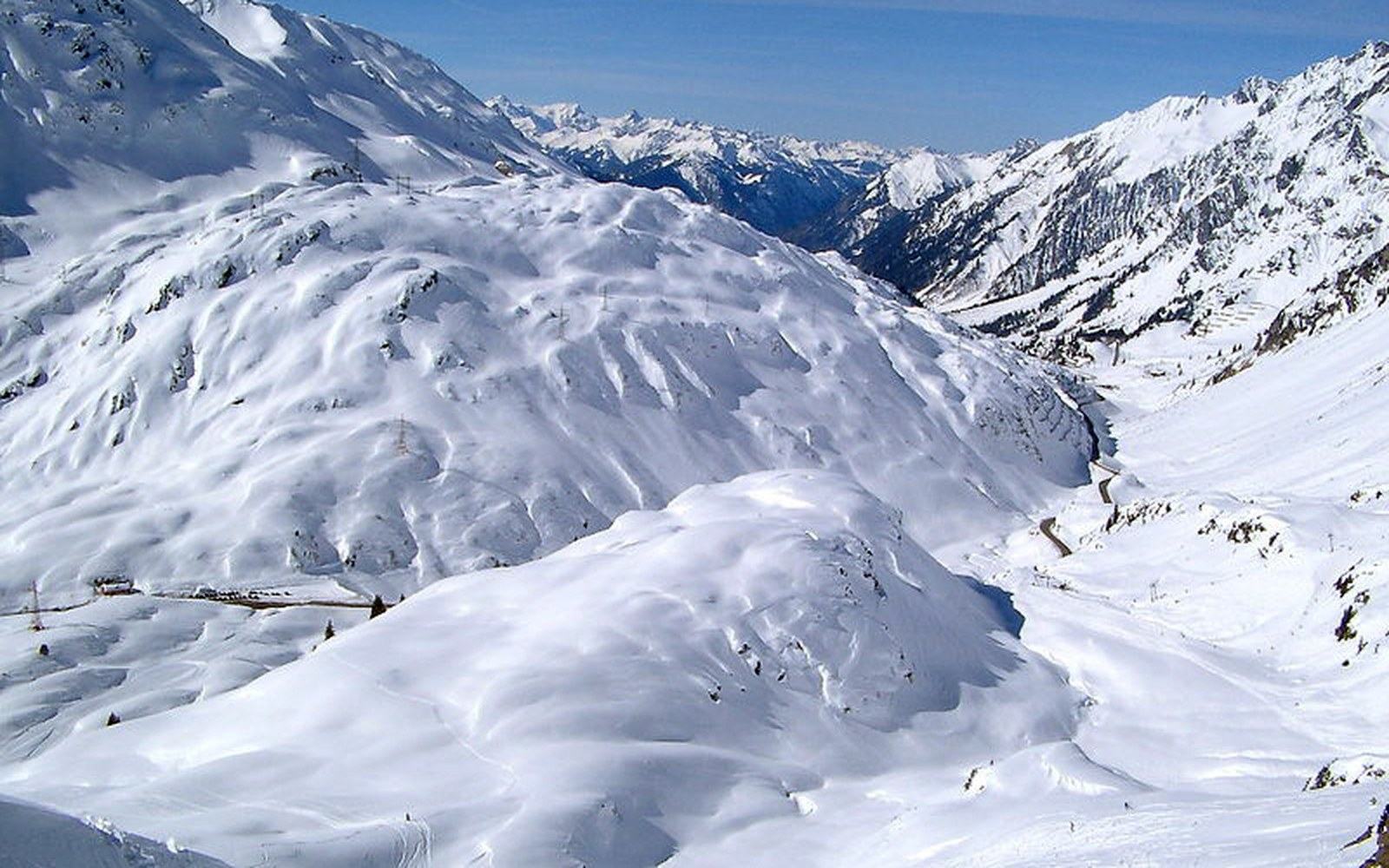
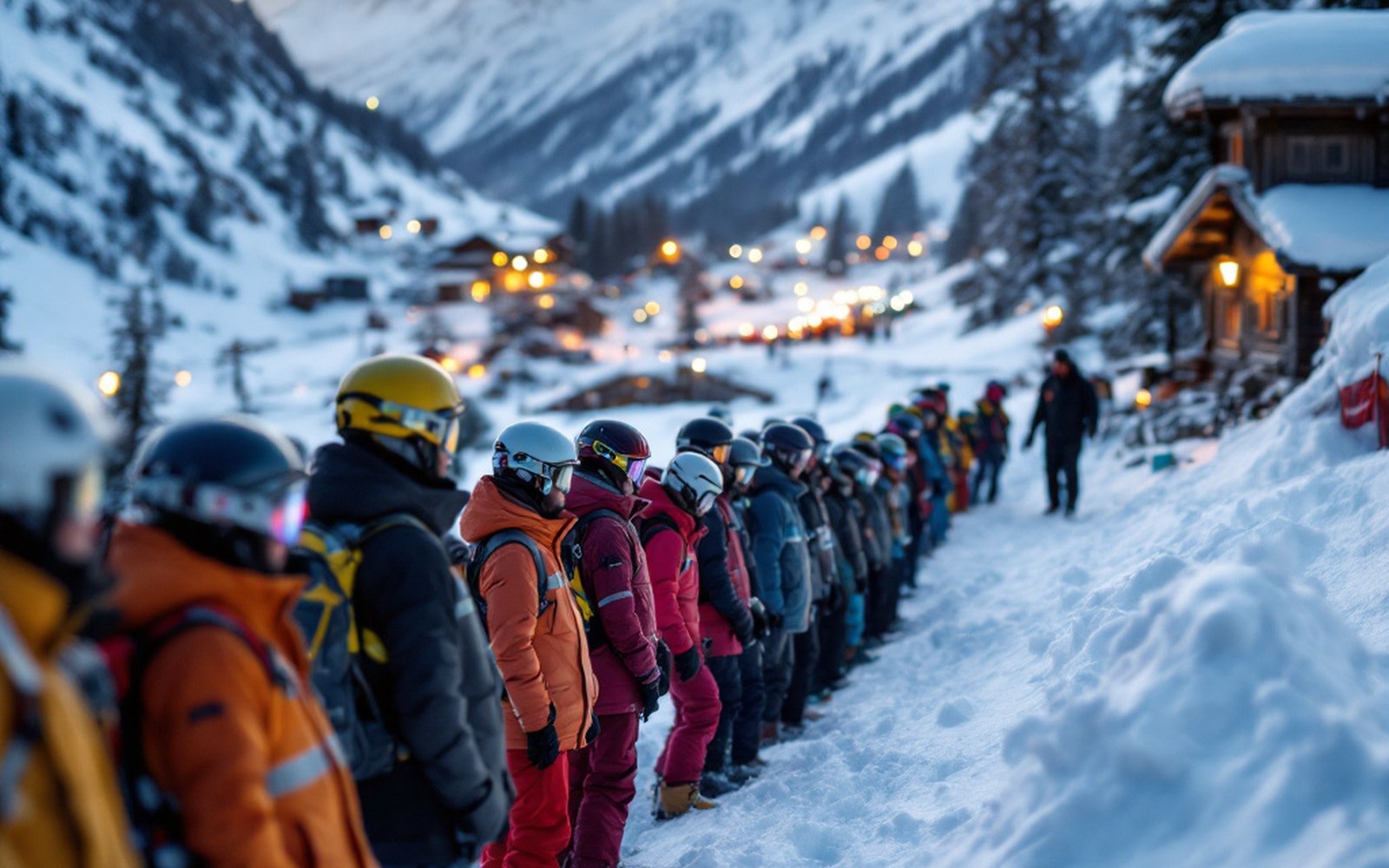
St. Anton am Arlberg sits at the bottom of a bowl. The village spreads along the valley floor, hemmed in by the railway to the south and rising ground to the north, and the base station for the Galzigbahn sits where the buildings run out and the mountain begins. There is no plaza, no generous forecourt, no room to string a hundred people along a linear platform while they wait for the next cabin. The slope starts immediately, and the engineers had to solve the question of how to load a high-capacity gondola system into a building that could not be wide, could not be long, and had to absorb a crowd.
The answer was a boarding wheel — a slowly rotating circular structure inside the station, sometimes called a pulse gondola or a circulating cabin system, on which the individual cabins are hung. As the wheel turns, each cabin passes through the boarding zone at walking pace, riders step in, and the cabin continues around and out onto the cable without the line ever stopping. Loading is continuous rather than intermittent; the bottleneck of a fixed platform, where a stationary cabin fills and then departs before the next one arrives, disappears entirely.
How the wheel works
The cabins are clamped onto the main haul cable for the ride up the mountain, but inside the station they are decoupled from it and transferred onto the wheel's own drive. That decoupling is what makes the whole system possible: the cable runs at a fixed operational speed optimised for the mountain span, while the wheel turns slowly enough for passengers to board without difficulty. At the top station the process reverses — cabins are taken off the wheel, reattached to the cable, and the arriving cabins from above are taken in, slowed, and cycled through the upper boarding zone in the same fashion.
The Galzigbahn that operates this system is the second-generation installation, opened in 2007, replacing an older cabin line that had served St. Anton since the 1980s. The new station, designed to handle the volumes that modern St. Anton generates on a busy morning, made the wheel arrangement not a curiosity but a functional necessity. Throughput is the governing variable: the wheel allows the line to run at its full designed capacity without the platform becoming the constraint.
What you are standing in
There is no plaza, no generous forecourt, no room to string a hundred people along a linear platform while they wait for the next cabin
The base station is a substantial piece of engineering architecture — the machinery is not hidden behind cladding but present in the space, audible and visible as the wheel turns and the cabins cycle through. The floor plan is organised around the wheel's footprint, and the passenger route through the building is a curve, not a straight line, because the geometry of the system demands it. Visitors who arrive expecting a standard gondola queue and find themselves walking slowly around a turning ring of cabins are briefly disoriented, then usually absorbed by the mechanism itself.
The Galzig above has been a lift destination since the earliest mechanised ascents from St. Anton ↗, and the name appears in the records of the resort's infrastructure from the 1930s onward, when St. Anton was already building the lift network that would make it one of the primary departure points for high-mountain skiing on the Austrian side of the Arlberg. Hannes Schneider's school was operating from the village across roughly those same decades, and the ability to get large numbers of people onto the mountain efficiently was already a practical concern.
The wheel at the bottom of the Galzigbahn is, in that light, the latest answer to a question that has been asked here for nearly a century: how do you move a lot of people from a constrained valley floor onto open high ground, quickly and without a queue that blocks the street? The engineering changes; the problem stays the same.